Jerusalem is unlike any other city on earth. Home to sacred sites of Judaism, Christianity, and Islam, the holy city captivates millions of visitors every year. This Jerusalem Travel Guide 2026 covers everything you need for an extraordinary visit.
Before Visiting Jerusalem – Israel ETA
To visit Jerusalem, you first need to enter Israel. Since January 2025, visitors from visa-exempt countries must hold an approved ETA-IL. Apply at israel-entry.piba.gov.il before your trip. For full details, see our Israel ETA application guide and entry requirements 2026.
Jerusalem Old City – The Four Quarters
The heart of Jerusalem is the Old City, a walled city of just one square kilometer containing some of humanity’s most sacred sites.
Jewish Quarter
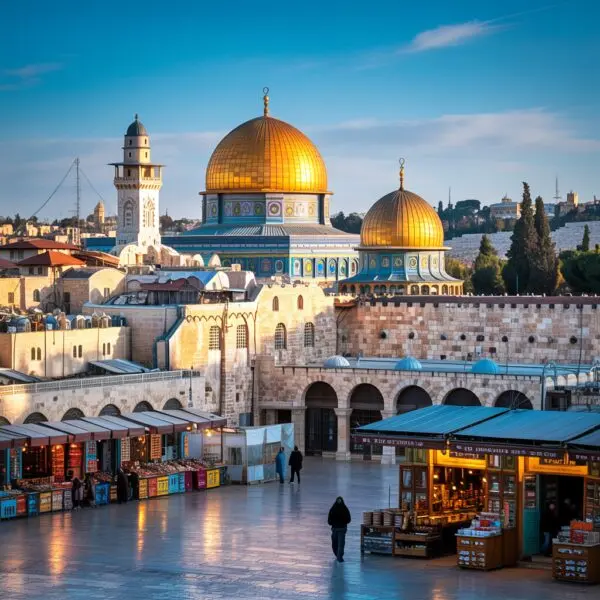
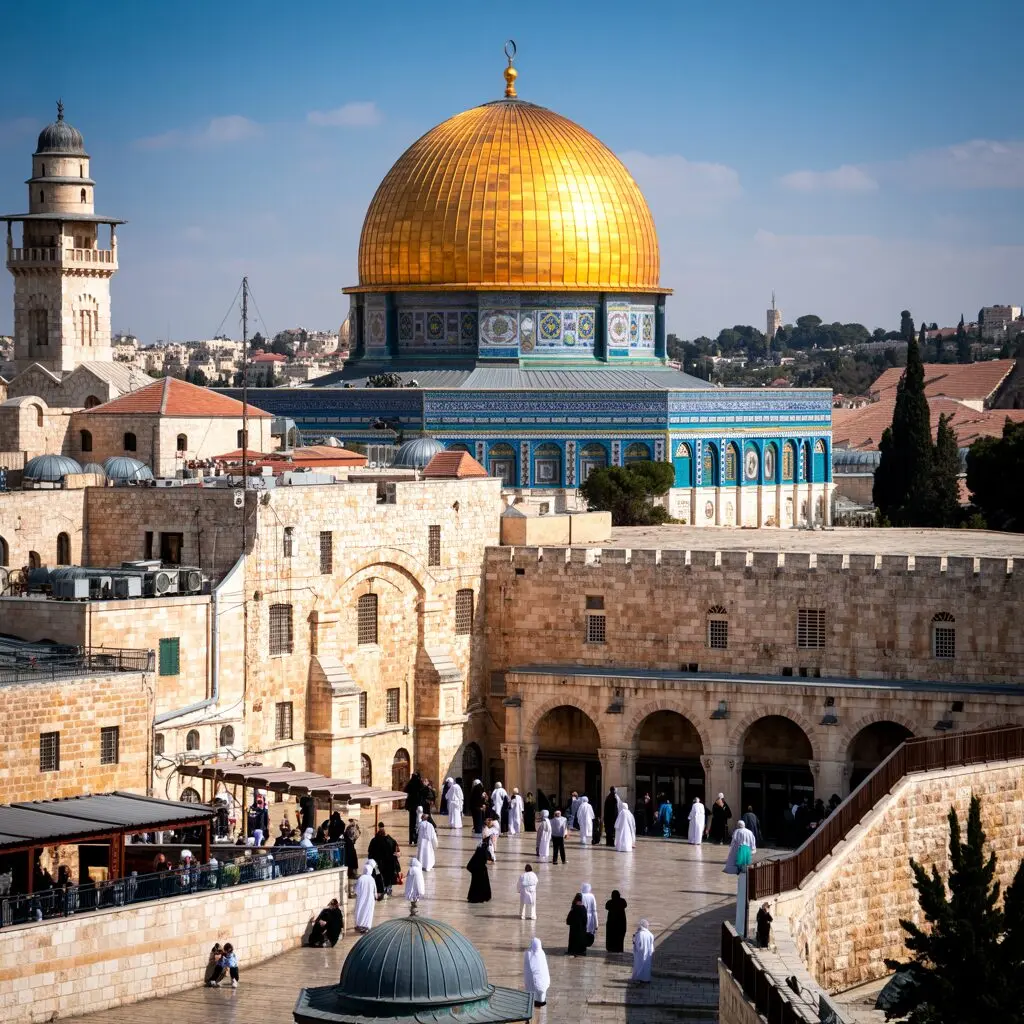
The Jewish Quarter contains the Western Wall (Kotel) – the holiest site in Judaism, a remnant of the Second Temple’s retaining wall. The plaza before the Wall operates as an open-air synagogue. Dress modestly (head covering required for men; women use the separate section). Also in the Jewish Quarter: the Cardo (ancient Roman main street), the Hurva Synagogue, and multiple archaeological sites.
Muslim Quarter
The Muslim Quarter is the largest and most densely populated of the four quarters. The Temple Mount (Haram esh-Sharif) is located here, containing the iconic Dome of the Rock and the Al-Aqsa Mosque – the third holiest site in Islam. Visiting rules for non-Muslims are strict – check current access hours and regulations before visiting. The Via Dolorosa (Way of the Cross) also runs through this quarter.
Christian Quarter
The Church of the Holy Sepulchre stands in the Christian Quarter, marking the site where Jesus is believed to have been crucified, buried, and resurrected. Shared between multiple Christian denominations, it is one of the most significant pilgrimage sites in Christianity. The narrow alleys of the Christian Quarter are lined with pilgrim shops, churches, and historic buildings.
Armenian Quarter
The smallest of the four quarters, the Armenian Quarter is home to the Armenian Cathedral of Saint James and the Armenian Museum. Armenians have had a continuous presence in Jerusalem for over 1,700 years.
Jerusalem Beyond the Old City
Yad Vashem
Israel’s official memorial to Holocaust victims is one of the world’s most powerful and important museums. The main museum traces the history of the Holocaust through personal stories and artifacts. Entry is free; advance booking is recommended. Allow at least 3 hours.
Israel Museum
The Israel Museum houses one of the world’s great archaeological collections, including the Dead Sea Scrolls in the stunning Shrine of the Book. The museum also features extensive Judaica collections, archaeological finds, and fine arts.
Mahane Yehuda Market (The Shuk)
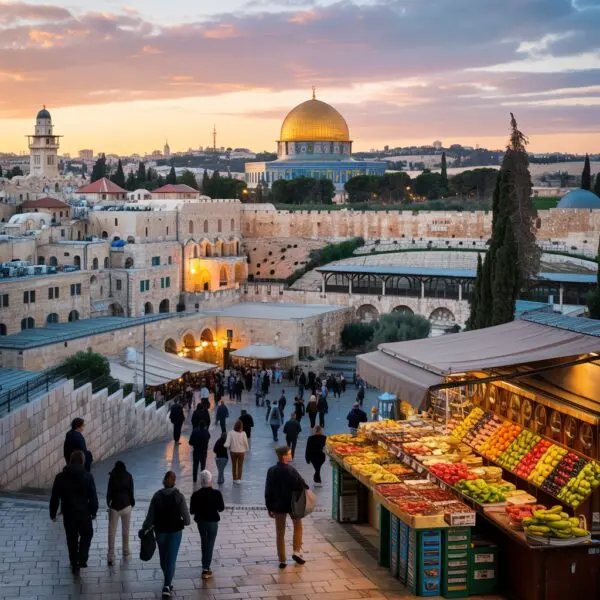
Jerusalem’s famous outdoor market is a sensory feast of spices, fresh produce, baked goods, and street food. By day it serves locals; by evening it transforms into a bar and restaurant district.
Getting to Jerusalem
From Ben Gurion Airport (TLV) – the main entry point (see our airports guide):
- Train: Direct high-speed train from TLV to Jerusalem Yitzhak Navon station (approx. 30 minutes)
- Shared taxi (sherut): Fixed-price shared taxis operate between TLV and Jerusalem
- Private taxi: Approximately 250-350 NIS, around 45-60 minutes
Where to Stay in Jerusalem
Jerusalem has accommodations ranging from luxury hotels near the Old City walls to budget hostels in the city center. Key areas to consider:
- City Center (Jaffa Road area): Good transport links, mix of hotels
- Near the Old City (Mamilla, Mount of Olives): Premium location, higher prices
- German Colony: Charming, quieter, good restaurants
Jerusalem Travel Tips 2026
- Wear comfortable shoes – Jerusalem involves a lot of walking on uneven cobblestones
- Dress modestly at religious sites – cover shoulders and knees
- Shabbat (Friday sunset – Saturday night) closes most businesses and public transport
- Book popular sites (especially Yad Vashem and the Israel Museum) in advance
- Carry water – the city is hilly and the climate can be warm
Frequently Asked Questions
Do I need ETA to visit Jerusalem?
Yes. To visit Jerusalem you need to enter Israel, which requires an approved ETA-IL for visa-exempt nationals since January 2025. Apply at israel-entry.piba.gov.il before your trip. See our Israel ETA guide for details.
How many days do you need in Jerusalem?
Allow at least 3-4 days to cover the Old City properly plus Yad Vashem and the Israel Museum. A week gives time to explore at a relaxed pace and venture to nearby sites like Bethlehem and the Dead Sea.
Is Jerusalem safe for tourists in 2026?
The main tourist areas of Jerusalem are generally safe and well-patrolled. As with any travel, stay informed of current conditions via your government’s travel advisory. Certain areas may have heightened tensions; check advisories before visiting.